

Therapy can come with questions, new ideas and curiosities. Below you’ll find some information and resources to support you on your journey at Nourish PAC
Understanding EMDR
Eye Movement Desensitisation and Reprocessing (EMDR) is an evidence-based psychotherapy that helps people process traumatic or distressing experiences. EMDR supports the brain's natural ability to process memories that may have become "stuck," reducing the emotional distress associated with them over time.Before beginning EMDR processing, we spend time developing safety, understanding your story, and building the resources needed to ensure you feel supported throughout the process.Where clinically appropriate, extended 90-minute EMDR processing sessions may be recommended.
You can learn more about EMDR here - https://emdraa.org/learn-about-emdr/
Understanding IFS
Internal Family Systems (IFS) is an evidence-based approach that helps people understand the different parts of themselves that influence thoughts, emotions, and behaviours. By approaching these parts with curiosity and compassion, IFS supports healing from difficult experiences, strengthens self-understanding, and fosters greater emotional balance. You can learn more about IFS here: https://psychology.org.au/for-members/publications/inpsych/2022/winter-2022/internal-family-systems-therapy
Understanding CPP
Child-Parent Psychotherapy (CPP) is an evidence-based trauma treatment for children aged 0-5 and their caregivers. It repairs the child’s sense of safety and strengthens the caregiver-child relationship to heal the effects of abuse, violence, or severe stress.CPP is heavily focused on the dyad (the caregiver and child together) but can occasionally include parallel individual sessions for the parent. Therapists use play, dialogue, and body language to help both generations process and overcome the lasting impacts of trauma. You can learn more about CPP here: https://childparentpsychotherapy.com/about-cpp/
Understanding Polyvagal Theory
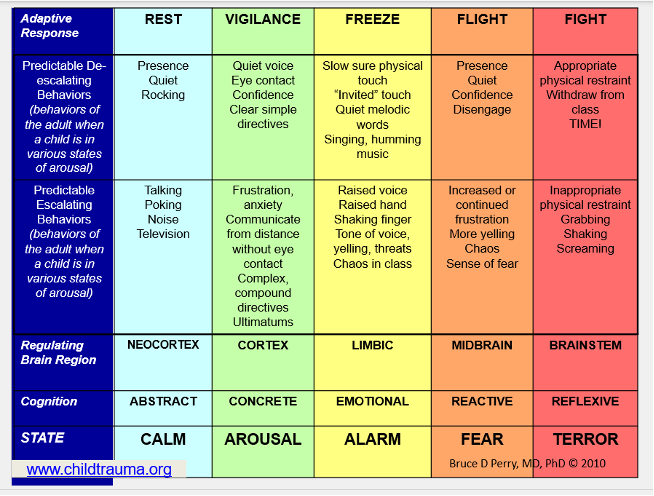
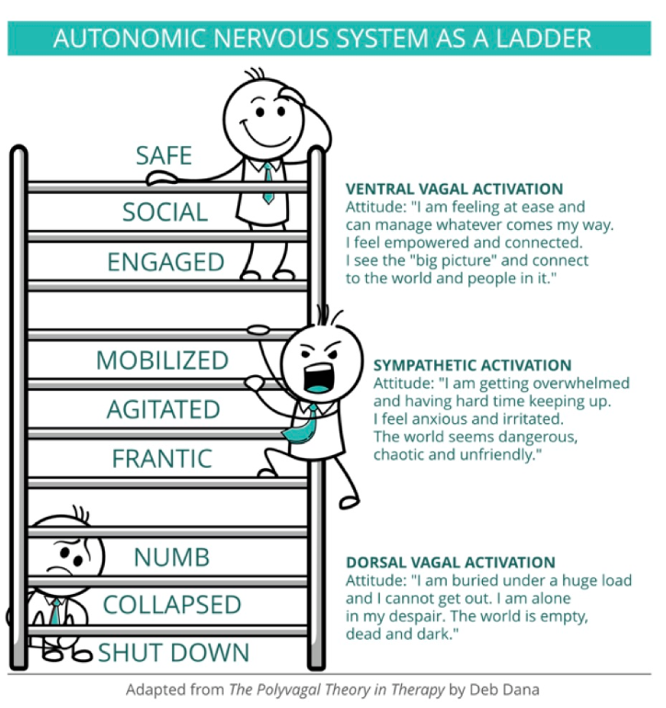
Our nervous system has 3 main response states, to stress:
Ventral Vagal state is when we feel calm and safe and can perform at an optimum capacity (see image below).
Sympathetic Activation is when our nervous system detects cues of danger. The response goes into “fight or flight” in a way of protecting self.
Dorsal Activation occurs when our nervous system assesses the danger as overwhelming and the defence response is “freeze”
How can I apply Polyvagal Theory to my daily life?
Recognise and understand how your nervous system responds to stress by learning how to map your nervous system.
Identify what types of self-regulation techniques you will find most useful when in different states of nervous system response (fight, flight, freeze or collapse).
Practice different types of techniques for self-regulation that work in ways to activate the vagus nerve including opportunities to explore novel ways of breathing, mindfulness, and physical activity.
For more information about Polyvagal Theory, visit https://www.polyvagalinstitute.org/
Trauma and the nervous system: a polyvagal perspective
https://youtu.be/uH5JQDAqA8E?si=96mQqVauO2DJLTxt
Safe and Sound Protocol
https://youtu.be/Xu_4LAS2Prw?si=iCuRzeCJjJHL23UD

Self-Care when engaging in therapeutic work.
Therapy can be both meaningful and exhausting. As you process difficult experiences, you might find yourself feeling tired or emotional between sessions. That’s a normal part of healing. Try to nourish your body, take in nature, move in ways that feel good, and allow for stillness. Simple, caring moments can help support your nervous system. When things start to feel too much, notice your senses. What can you see, hear, feel, smell, or taste right now? Just a few mindful breaths can bring you back to steadiness. There’s no perfect way to do this. Be as kind to yourself as you would be to someone you love. Be gentle with yourself. Rest when you need.
Ensure to speak to Jeannie if your symptomology is impacting you during your episode of therapy.